Patrick Lamson-Hall

Urban planner

I help rapidly growing cities plan for their expansion before it happens.

I am the founder and CEO of Roads for Growth and Program Director of the Urban Expansion and the Periphery Program at the Africa Urban Lab, which works with about 60 cities in seven African countries to plan and open arterial roads on their peripheries. I am also Co-Founder and Principal Urban Planner of Fitted Projects, a Fellow of the NYU Marron Institute and an Urban Management Specialist at Cities Alliance.

Before that I spent eleven years at New York University, where I established and led the Urban Expansion Observatory, coordinated the Ethiopia Urban Expansion Initiative and coordinated exploratory urban expansion work in India and the Philippines, and I was an Economist at the OECD Sahel and West Africa Club. I hold a PhD in Public Administration from NYU Wagner.

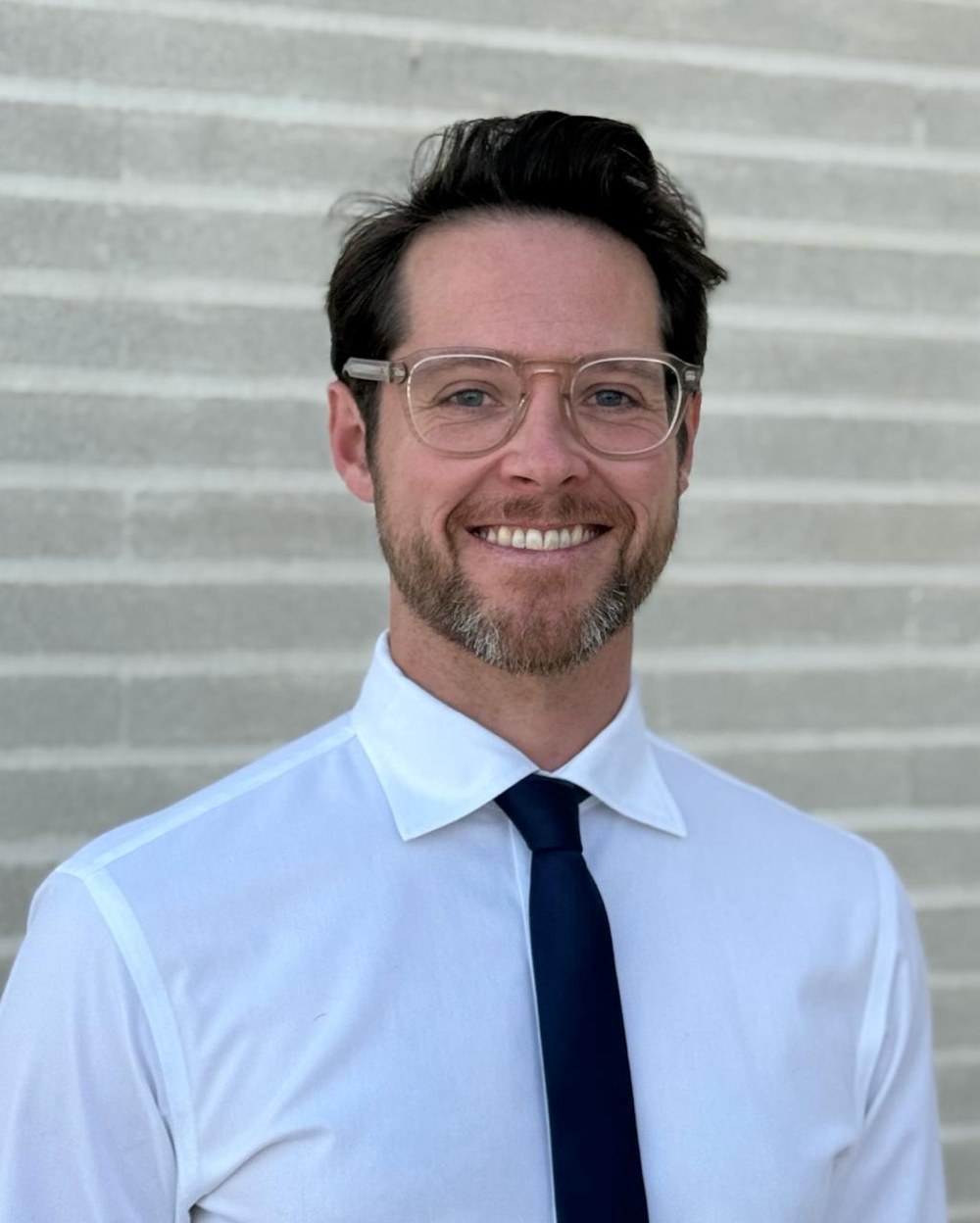
Head and shoulders portrait of a bearded man in glasses, a white shirt and a navy tie, smiling, against a pale brick wall

Current roles

Roads for Growth

Founder and CEO · 2026 to present

A US non-profit launched in 2026, working to accelerate the scale-up of urban expansion planning across Sub-Saharan Africa. We provide technical support to motivated cities. Together with the UXP Program it has grown from $150,000 and no staff in 2024 to a team of 11 and seven grantee organisations in seven countries.

Africa Urban Lab, African School of Economics

Program Director, Urban Expansion and the Periphery · Zanzibar

I founded the Urban Expansion and the Periphery (UXP) Program in 2024 with support from Schmidt Futures. It trains municipal teams in Ethiopia, Kenya, Uganda, Rwanda, Mozambique, Somaliland and Guinea-Bissau, and I have raised more than $3 million for it from Schmidt Futures, the Livelihood Impact Fund, the Mulago Foundation and other funders.

Fitted Projects

Co-Founder and Principal Urban Planner · New York, Zanzibar, Paris

A market-focused urban planning firm for new cities, urban extensions and special zones, co-founded with Nuria Forques in 2019. We are two principals with about 14 staff and associates. fittedprojects.com

Cities Alliance / UNOPS

Urban Management Specialist · since 2020

Technical support for planning in secondary cities that host refugees and displaced people, in Ethiopia, Uganda, Somaliland, Congo and Sudan. I also manage grants to city partners in five countries, assessing their performance, budgets and milestones.

NYU Marron Institute of Urban Management

Fellow · 2022 to present

Continuing research with Solly Angel on urban extents, density and forecasting, after eleven years on the institute's urban expansion team.

SDZ Alliance

Board member · 2021 to present

A non-profit, formerly Refugee Cities, that promotes sustainable development zones for migrants and displaced people.

Past roles

OECD Sahel and West Africa Club

Economist and Policy Analyst · 2023 to 2024 · Paris

I led the team that drafted and produced Africa's Urbanisation Dynamics 2025: Planning for Urban Expansion, a joint report with the African Development Bank, Cities Alliance and UCLG Africa on how fast-growing cities can anticipate, plan, finance and govern their growth. I also led the update of Africapolis, the database of all cities in Africa, adding projections of urban growth to 2050.

NYU Urban Expansion Program

Research Scholar and Program Coordinator · 2011 to 2022

I joined the urban expansion team as a Research Assistant in 2011 and rose to lead our operations in three countries. I coordinated the Ethiopia Urban Expansion Initiative from 2015, brought in and managed grants amounting to over $1 million and managed teams of up to 10 consultants as we worked with governments to help manage urban growth.

Urban Expansion Observatory, Mumbai

Founder and Manager · 2014 to 2022

I founded and managed the Urban Expansion Observatory at the Mahatma Education Society in Mumbai, a 30-person satellite imagery facility with a $1.5 million budget that produced the data for the Atlas of Urban Expansion.

Politas Consulting

Urban Economic Lead Consultant · 2019 to 2023

Feasibility work on special economic zones and charter cities for UN agencies, national governments and global strategy firms, including zones designed to support refugees and migrants, the model promoted by Refugee Cities.

Awards

Rainer Arnhold Fellowship, Mulago Foundation, 2026 · one of ten fellows selected in March 2026, for urban expansion planning in African cities.

Work

Contact

plamsonhall@gmail.com

Measuring and forecasting how cities grow

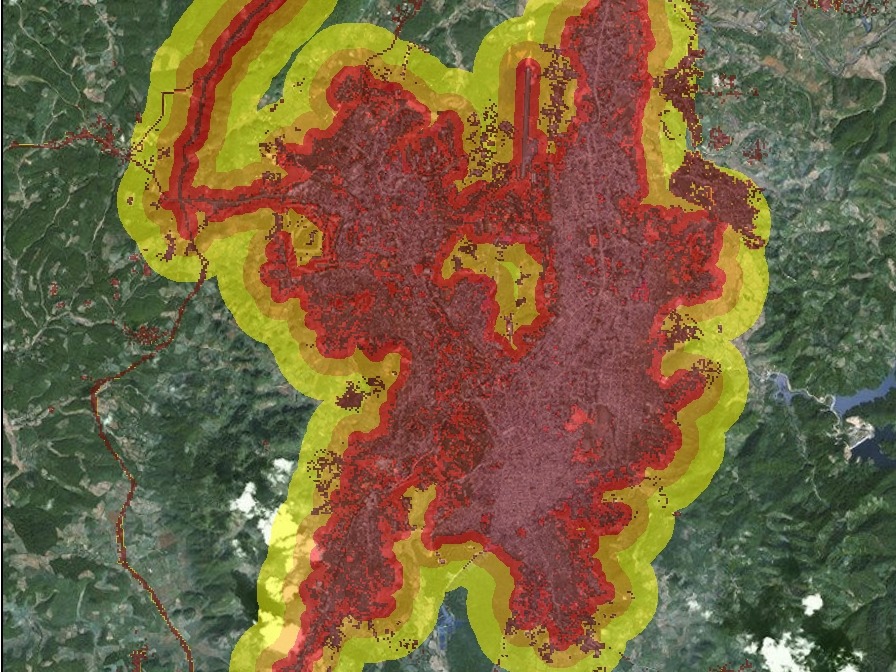
Satellite image of a city with its built-up area in dark red, ringed by red, orange and yellow bands showing forecast expansion
Forecast of the built-up area of Lashio, Myanmar: the 2013 extent in dark red, expanding through 2025 and 2035 to 2045 in yellow, under a 1.5 per cent density decline scenario.

I joined the NYU Stern Urbanization Project in 2011 as a research assistant and the monitoring and evaluation expert on the urban expansion team, and I later led that team at the Marron Institute. Most of the research below was done with Solly Angel, and all of it comes back to the same questions - how much land cities occupy, how densely, how well laid out, and how much more they will need.

2014 – 2016

Atlas of Urban Expansion: 2016 Edition

I co-wrote the Atlas with Shlomo Angel, Manuel Madrid, Alejandro Blei and Jason Parent. It is an open-source reference of maps, satellite images and data on spatial change in a stratified global sample of 200 cities from 1990 to 2014, produced with the Lincoln Institute of Land Policy and UN-Habitat. In 2016 its maps of the growth of cities were shown at the Venice Architecture Biennale, in the exhibition "Report from Cities: Conflicts of an Urban Age" curated by LSE Cities. atlasofurbanexpansion.org

2014 – 2022

India Urban Expansion Observatory

I established and led the Observatory at the Mahatma Education Society in Mumbai, a 30-person satellite imagery analysis facility with a $1.5 million budget that produced the data for the Atlas, including measurements of street layout, block size and informality on the urban periphery. From 2019 I was also a Visiting Fellow at the IDFC Institute in Mumbai.

2019 – 2021

The Anatomy of Density

With Solly Angel and Zeltia Gonzalez-Blanco I wrote the Anatomy of Density, published in Buildings and Cities in March 2021. The paper shows that the density of a city can be factored into three components - floorspace occupancy, floor area ratio and residential share - or into seven, and it measures them in ten cities, from Dhaka, Hong Kong and Kinshasa to Madrid and Minneapolis. In other words, two cities can have the same density for very different reasons, and a city that wants to densify needs to know which of the factors it can change and what the trade-offs between them are.

I presented the framework at World Urban Forum 10 in Abu Dhabi in 2020, in webinars for the Global Platform for Sustainable Cities and C40 Cities, and with Solly Angel in the Densify and Expand session of the Marron Institute's four-part Anatomy of Density webinar series in April 2021. We also made the case for density during the pandemic, in In defence of density for the International Growth Centre. The companion paper, Densify and Expand, measured how much of the population added to a global sample of 200 cities between 1990 and 2014 was accommodated by densification and how much by expansion.

2014 – 2016

The Rise and Fall of Manhattan's Densities

With Solly Angel I reconstructed the population density of Manhattan from 1790 to 2010, and with the Museum of the City of New York we mapped the density of every New York City neighbourhood from 1640 to 2010. The work is now part of the museum's permanent exhibit, New York at Its Core.

2018 – 2021

Global analyses of urban growth

Our Not So Urban World, Housing Affordability in a Global Perspective, The New Urban Peripheries and Densify and Expand used the Atlas sample to describe how cities grew between 1990 and 2014. In 2024 The State of the Streets added measurements of street connectivity.

2016 – 2023

UN-Habitat: geospatial methods for the urban SDGs

With UN-Habitat I worked on the measurement of the urban Sustainable Development Goal indicators, in particular 11.3.1 (the ratio of land consumption to population growth) and 11.7.1 (public open space), and on the urban extent methodology behind them. I took part in the 2017 Expert Group Meeting on geospatial definitions for human settlements indicators, alongside the European Commission's Joint Research Centre, FAO, USAID and the US Census Bureau, and in the December 2023 Expert Group Meeting on land use and urban green spaces.

2024

PhD: Finding the future edge

My doctoral thesis at NYU Wagner, Finding the future edge: New tools for long-term planning in rapidly growing cities, introduced a simpler method for forecasting urban population and land area. Its first paper produced population projections from 2020 to 2050 for 3,750 cities of 100,000 people or more, based on their urban extents instead of their administrative boundaries. The method is now used by the World Resources Institute and by Africapolis.

2025 – present

Extents and forecasts for small cities

For the cities in the programme we now produce urban extents and 30-year growth maps from public Landsat and Sentinel-2 imagery, including clusters of small towns in western Kenya and the Rift Valley, and the same method is being extended to cities worldwide.

2026

World Resources Institute: Atlas of Urban Growth

With Solly Angel and the WRI team I am working on spatial growth projections for the Atlas of Urban Growth, which compares several methods of projecting the population and extent of cities and will carry the Atlas work forward to 2050.

Urban expansion planning in practice

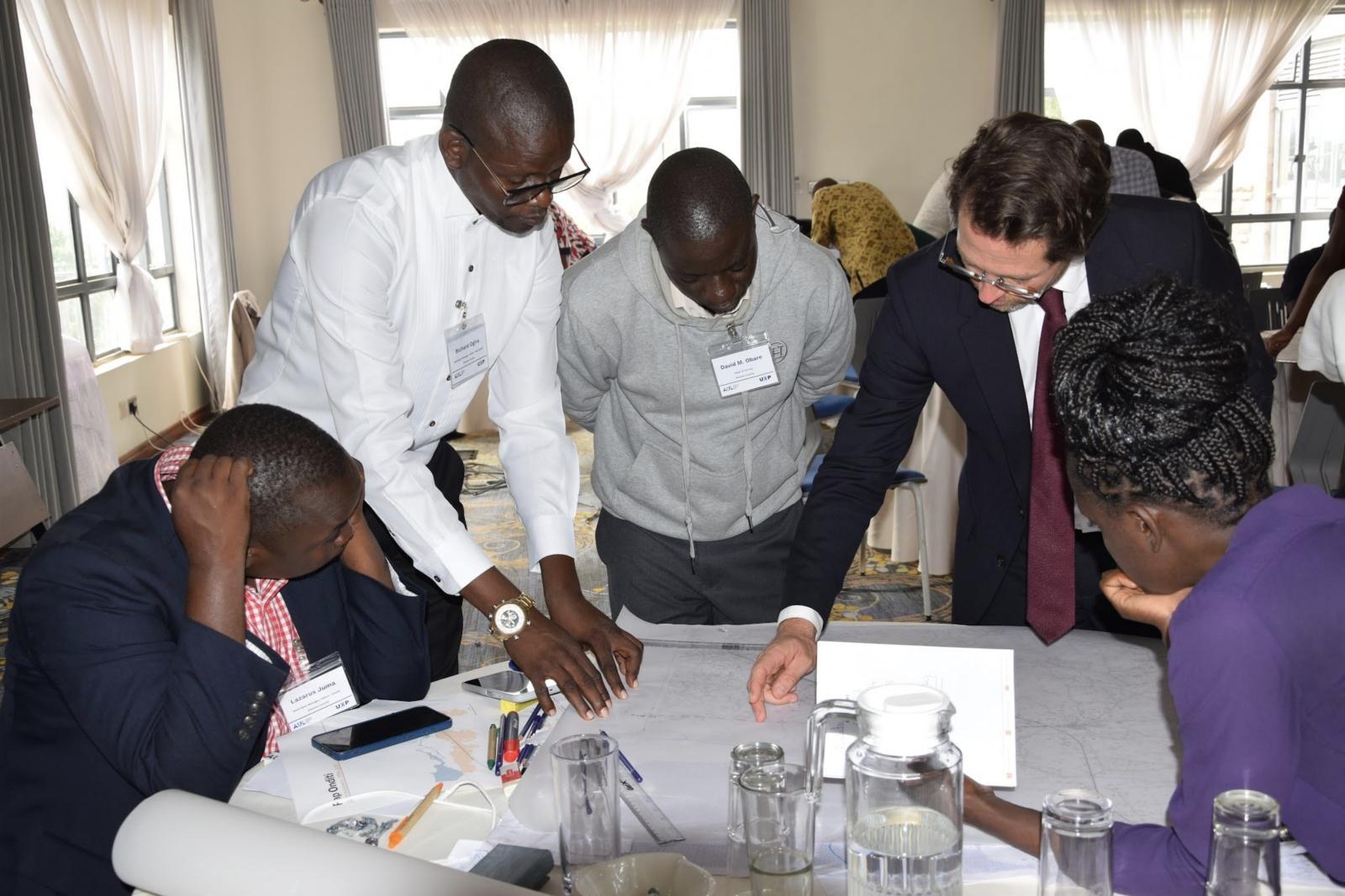
A man in a dark suit leaning over a table and pointing at a large map with four workshop participants gathered around it
Working through a map with participants at the UXP workshop in Kisumu, Kenya, August 2026.

Urban expansion planning is a simple concept. A city forecasts its growth for 30 years, lays out a grid of arterial roads across the land it will need, secures the rights of way through voluntary donation and opens simple roads at low cost, and the whole thing can be done within a single political term.

However, a simple concept still requires real development skill to implement on the ground, where mayors, surveyors, landowners and ministries all have to move together. With my guidance and engagement, an abstract idea hatched in the ivory tower has become a reality in dozens of cities - roads you can walk on and neighbourhoods people can live in.

2013 – 2017

Ethiopia Urban Expansion Initiative

The initiative was a partnership between NYU and the Ethiopian Ministry of Urban Development and Construction, led at NYU by Paul Romer and Solly Angel and carried out by an Ethiopian team working with the cities themselves. I joined in 2013 to design and run its monitoring and evaluation, and from 2015 I coordinated the programme from New York. It trained leaders in 18 secondary cities, and by 2017 the four pilot cities had opened or secured 571 km of arterial roads. A household-level evaluation across eight of the cities, published by the International Growth Centre in March 2026 with Kaleab Kebede Haile and Kiflu Gedefe Molla, found that the initiative raised annual household income by 7 to 14 per cent. The underlying evaluation was funded by a $450,000 Open Philanthropy grant that I secured with Solly Angel in 2022.

NYU years

Exploratory work in India and the Philippines

I coordinated NYU's exploratory urban expansion work in India and the Philippines, working with strong local partners to test the same approach of growth forecasts and arterial grids. In India the work led in 2018 to a capacity building programme for the town planners of the Government of Maharashtra, with WRI India. In the Philippines the work centred on Davao, where in May 2017 I led the NYU research team and a group of Stern MBA students in a survey of open public spaces, with the Sustainable Davao Movement and the city government.

2014 – 2022

Colombia, Ecuador, Mexico and workshops elsewhere

I designed and led more than a dozen workshops on managing urban expansion, at the invitation of organisations ranging from UNICEF to CAMACOL, the Colombian association of home builders, and represented NYU in the UN Expert Group Meetings that designed the monitoring framework for the urban and spatial Sustainable Development Goals.

2018

100 Resilient Cities and the Rockefeller Foundation

With a $100,000 grant from 100 Resilient Cities, the network pioneered by the Rockefeller Foundation, we studied urban growth in 20 member cities and found many of them growing rapidly and without order on their peripheries. To that end we wrote the handbook Planning for Resilient Urban Growth and an assessment protocol for judging whether a city is likely to succeed with the Making Room approach.

2018 – 2020

Climate Smart Cities: Grenada

I led a team of ten consultants on a $600,000 Green Climate Fund readiness project in Grenada, preparing a portfolio of infrastructure projects to make the urban areas of the main island more resilient to sea level rise, storm surge and hurricanes.

2020 – present

Cities Alliance: migration, displacement and secondary cities

At Cities Alliance I have supported about a dozen municipalities in Somaliland, Uganda, Ethiopia, Congo and Sudan, leading field missions, training local officials and holding consultations with residents. I drafted the 2022 flagship report Managing Migration in Secondary Cities: Planning for Equity and Growth the report Climate Resilient Urban Expansion Planning and the 2023 technical report Ready to Grow on cities hosting displaced people and migrants, and most of my work there is still directly with the cities.

2024 – present

UXP Program and Roads for Growth

After leaving the OECD in 2024 on a year of support from Schmidt Futures, I founded the Urban Expansion and the Periphery Program at the Africa Urban Lab. It works with national ministries, city associations such as the Urban Authorities Association of Uganda, and universities such as Eduardo Mondlane University in Mozambique, and by 2026 it had reached about 60 cities in seven countries. It began in 2024 with $150,000 and no staff, and I have since raised more than $3 million and built a team of 11, with seven partner organisations receiving grants to do the work in their own countries. In August 2026 Kenya launched a national urban expansion planning programme, with six municipalities and two cities drafting their plans at the inception workshop and 19 more in line for the year. In Jigjiga and Tog Wajaale in Ethiopia, where the work is supported by both the Africa Urban Lab and Cities Alliance, the municipalities have opened arterial roads on the periphery and new development has followed along the corridors. The average cost to open a simple road in Tog Wajaale was $400 per kilometre. Roads for Growth was launched in 2026 to take this to the roughly 1,500 cities of Sub-Saharan Africa by 2040, with the Africa Urban Lab as an essential partner.

New cities, special zones and refugee cities

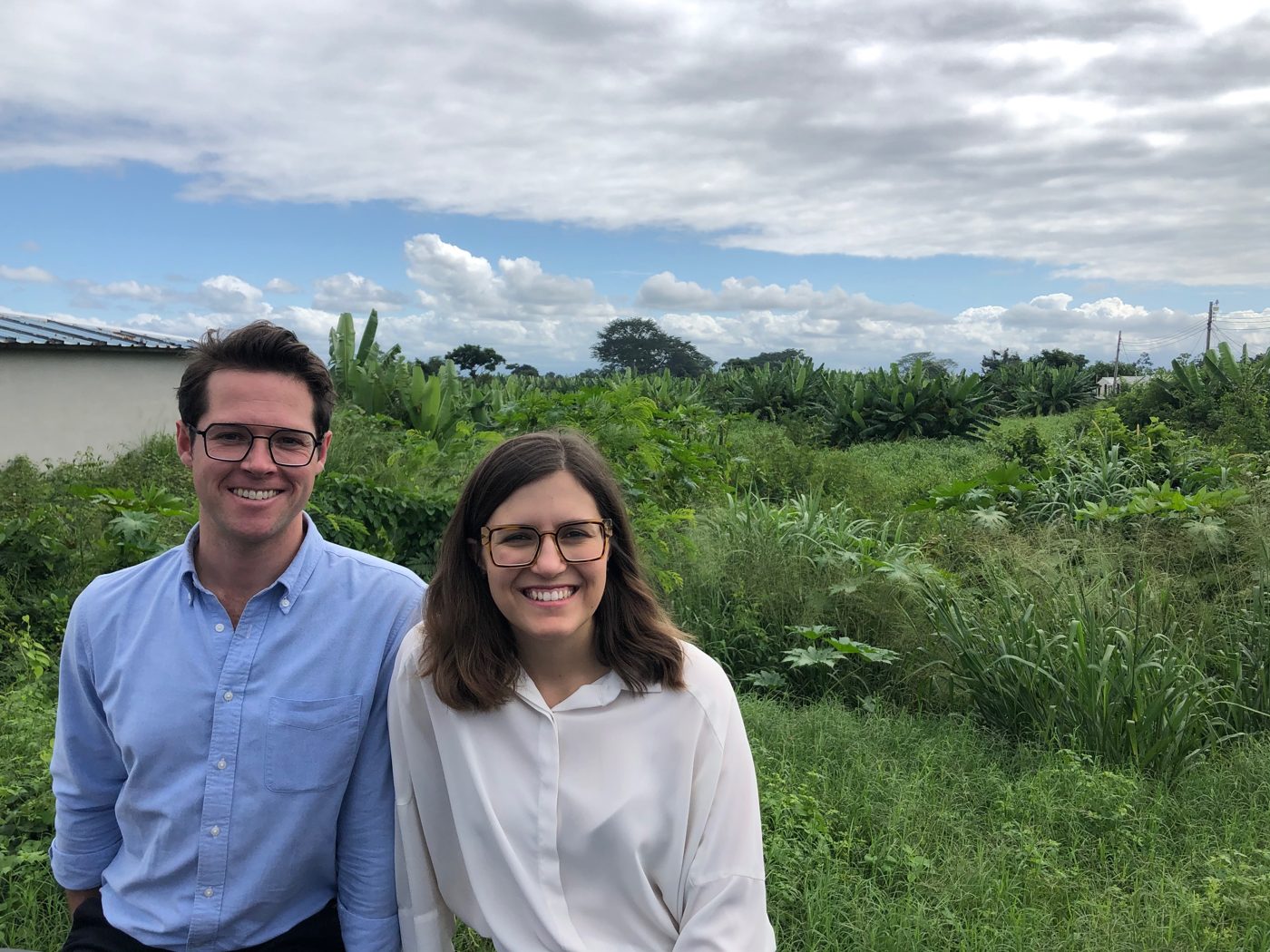
Two people in glasses smiling in front of an overgrown green site with banana plants under a cloudy sky
With Nuria Forques on location in Choloma, Honduras, while planning Ciudad Morazán, 2019.

Alongside my public sector work, I have a long-standing interest in charter cities, special economic zones and governance innovation. What interests me in new cities is their potential to give people alternatives - another place to live and work, under better rules. My private practice works with new city developers around the world to design thoughtful and functional cities that bring opportunity and a high quality of life to their residents.

2019 – 2023

Politas Consulting and Refugee Cities

As Urban Economic Lead Consultant at Politas, a consultancy for special economic zones and charter cities, I prepared feasibility work for UN agencies, national governments and global strategy firms. This covered traditional SEZs, autonomous charter cities and zones designed to support refugees and migrants, the model promoted by Refugee Cities, the non-profit partner of Politas. I built a GIS method for comparing potential zone sites in Libya, Ethiopia and Bangladesh and developed a land value tax framework for a large charter city in Latin America.

2021 – present

SDZ Alliance

I sit on the board of the SDZ Alliance, the non-profit that grew out of Refugee Cities. It promotes sustainable development zones - new urban communities with special legal and administrative institutions - as a way for migrants and displaced people to work, start businesses and build homes legally, and I advise it as an urban planner and economic development specialist. I worked on its project in Ethiopia, funded by the Robert Bosch Foundation with UN-Habitat and the Ethiopian Government as partners, to design a zone that makes business licensing, legal employment, land leasing, housing and taxation easier for urban migrants and residents.

2019 – present

Fitted Projects

Nuria Forques and I founded Fitted Projects to plan new cities, urban extensions and special zones. We describe ourselves as urban planners who think like economists and urban designers who think like investors.

Projects

2019 – 2020

Ciudad Morazán, Honduras

Fitted Projects planned Ciudad Morazán, a 23-hectare special development zone in a working-class area of Choloma that combines industry, housing, shops and civic services. The plan set out a walkable street layout, zoning that allows uses to change over time, simple regulations and three new low-cost housing types. The regulations are published and the town is built and occupied.

2025 – 2026

Green Heart Kilifi, Kenya

For Green Heart Kilifi on the Kenyan coast we prepared the masterplan together with the market study, housing typologies and financial model that sit behind it, so that what is drawn is what the local market can absorb. Construction is pending.

2025 – present

Fumba Town, Zanzibar

We are consulting on the master plan for Fumba Town, a new town on the west coast of Zanzibar built by the developer CPS. In early 2026 we held consultations with the people who run the town day to day - operations, healthcare, commerce, security and sales - to inform the plan.

2020

Vanuatu special economic zone programme

With Politas I worked with the national government of Vanuatu on its new special economic zone programme, including a mission to the country. I recommended a simplified land management system and an infrastructure investment framework for the zones, alongside the programme's export and trade rules.

Most of the work we do at Fitted Projects for developers and governments is covered by non-disclosure agreements, so the list above is a small part of our portfolio. The confidential work is of the same kind - master plans, site evaluations and market and financial studies for new cities, urban extensions and special economic zones - and I am happy to describe it in general terms on request.

OECD, the World Bank and the United Nations

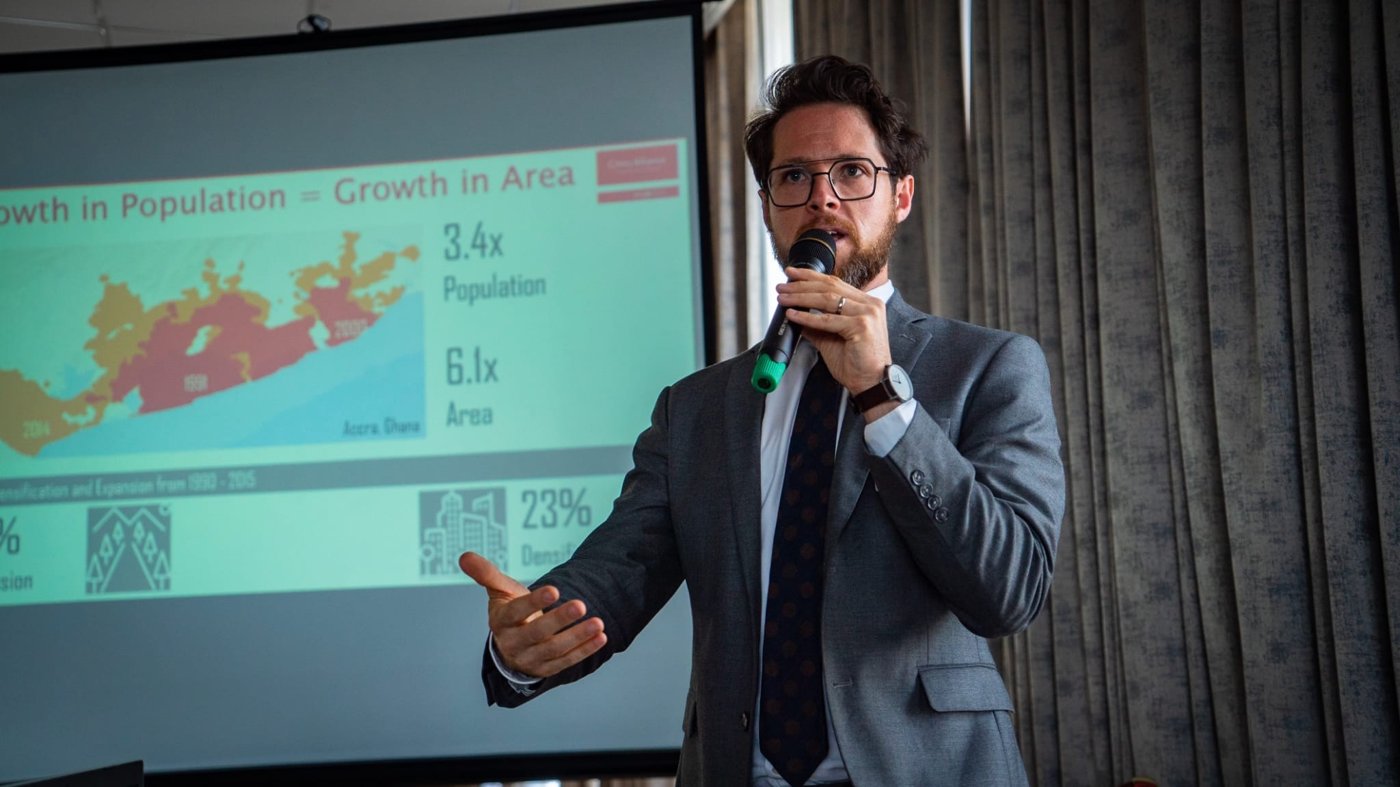
A speaker in a grey suit holding a microphone in front of a projected slide with a map and the heading Growth in Population = Growth in Area
Presenting the link between population growth and urban expansion at a Cities Alliance EUTF workshop in Kampala, March 2022.
2023 – 2024

OECD Sahel and West Africa Club

As Economist and Policy Analyst in Paris I led the team that drafted and produced Africa's Urbanisation Dynamics 2025: Planning for Urban Expansion, which sets out how fast-growing cities can anticipate, plan, finance and govern their growth. I also led the update of Africapolis, the database of all cities in Africa, adding projections of urban growth to 2050.

2025 – 2026

World Bank: Sub-Saharan Africa's Urban Awakening

As a short-term consultant to the World Bank in 2025 and 2026 I contributed to Chapter 3 of the report, on peripheries and planning for urban expansion, including the Gabiley and Mogadishu case studies. The evidence in that chapter comes from projects I led or was involved in, and the report was launched in Abidjan in November 2026. In January 2026 Solly Angel and I also ran a session with the World Bank for urban planning officials from Uzbekistan, held at Les Récollets in Paris.

2014 – 2022

United Nations and international forums

I contributed to the monitoring of the urban Sustainable Development Goals, working with UN-Habitat on how the indicators are measured, including a methodology for assessing public open space, and I led the NYU presence at the 2018, 2020 and 2022 World Urban Forums. I set up NYU's partnerships with 100 Resilient Cities, C40 Cities, the World Resources Institute and the IDFC Institute, and managed its partnerships with the Commonwealth Association of Planners, the Joint Research Centre of the European Commission and the Caribbean Development Bank.

Teaching, conferences and talks

2014 – 2019

NYU School of Professional Studies, Schack Institute of Real Estate

Adjunct Professor. I wrote and taught the Global Cities course, in the classroom and online, including its version for the diploma programme.

2022

NYU undergraduate teaching

In 2022 I was instructor for Cities and the Fight Against Climate Change, a course on the science of climate change, global urbanisation and what cities can do about emissions and extreme events.

2024 – present

Africa Urban Lab, African School of Economics

With Nuria Forques I teach Strategic Urban Planning in Zanzibar, a ten-module course that pairs spatial economics with the day-to-day practice of planning. The first cohort, in November 2024, had 38 students from eleven countries, and the third, in November 2026, had 73. Each student builds a course project around a city of their choice. For the first cohort I also wrote and taught Topics in Urban Governance, a course commissioned by the Charter Cities Institute.

2027

Executive MBA Urbanisme Organique

I will teach a session, alongside Solly Angel, in the 2027 Executive MBA Urbanisme Organique run by Sciences Po Rennes and Villes Vivantes. The programme runs from 6 January to 4 June 2027 in Rennes and Paris and is taught mainly in French.

Conferences and talks

Selected publications

Articles, blog posts and opinion pieces are listed under Media.

Media and writing

The EconomistThe AtlanticLe MondeThe GuardianCityLabSalonNew York Post

Press coverage, exhibitions, recorded talks and podcasts, and the articles I have written for a general audience.

In the press

Exhibitions

Video, webinars and podcasts

Articles and blog posts

About

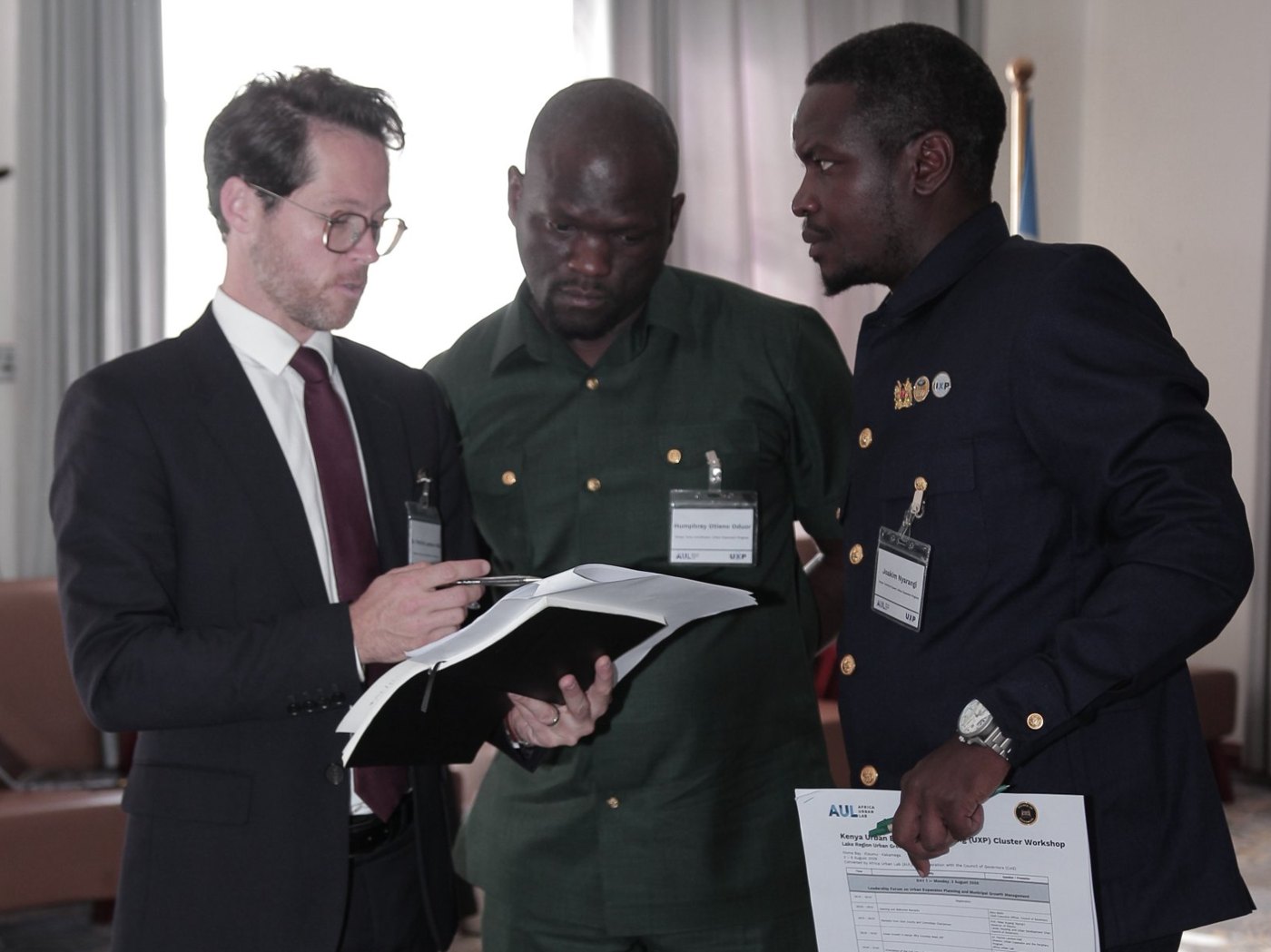
Three men in suits standing close together, one writing in an open notebook while the other two look on

Dr Patrick Lamson-Hall is an urban planner who helps rapidly growing cities prepare for their expansion before it happens. He is the founder and CEO of Roads for Growth and Program Director of the Urban Expansion and the Periphery Program at the Africa Urban Lab in Zanzibar, which works with about 60 cities in seven African countries to plan and open arterial roads on their peripheries.

He spent eleven years at New York University, first at the Stern Urbanization Project and then at the Marron Institute of Urban Management, where he worked with Professor Shlomo Angel and Paul Romer, co-wrote the Atlas of Urban Expansion and the Anatomy of Density, established and led the Urban Expansion Observatory in Mumbai, coordinated the Ethiopia Urban Expansion Initiative from 2015 and coordinated exploratory urban expansion work in India and the Philippines. He remains a Fellow of the Marron Institute and completed his PhD at NYU Wagner in 2024.

From 2023 to 2024 he was an Economist and Policy Analyst at the OECD Sahel and West Africa Club, where he led Africa's Urbanisation Dynamics 2025 and the update of Africapolis. He has worked with Cities Alliance since 2020 on migration, displacement and secondary cities, and contributed to the World Bank's 2026 report Sub-Saharan Africa's Urban Awakening.

He has built and managed teams of up to 30 people, raised more than $3 million for urban expansion planning and managed grants and project budgets for NYU, Cities Alliance and Roads for Growth. In the private sector he is Co-Founder and Principal Urban Planner of Fitted Projects, a planning firm for new cities, urban extensions and special zones, and he was previously Urban Economic Lead Consultant at Politas Consulting. In 2026 he was awarded the Mulago Foundation's Rainer Arnhold Fellowship.
2011 to the present

  1. 2011BA summa cum laude, Portland State University. Research Assistant at the NYU Stern Urbanization Project with Solly Angel and Paul Romer.
  2. 2012Field research on housing in Cape Town, South Africa.
  3. 2013Master of Urban Planning, NYU Wagner. Junior Research Scholar. Join the Ethiopia Urban Expansion Initiative on monitoring and evaluation.
  4. 2014The Rise and Fall of Manhattan's Densities. Work begins in India and Colombia. Start teaching Global Cities at NYU.
  5. 2015Associate Research Scholar, NYU Marron Institute of Urban Management. Coordinator of the Ethiopia Urban Expansion Initiative.
  6. 2016Atlas of Urban Expansion: 2016 Edition, with data from the India Urban Expansion Observatory. Its maps are shown at the Venice Architecture Biennale.
  7. 2017Four Ethiopian pilot cities have opened or secured 571 km of arterial roads.
  8. 2018Climate Smart Cities: Grenada. Planning for Resilient Urban Growth for 100 Resilient Cities.
  9. 2019Research Scholar and Program Coordinator at NYU Marron. Fitted Projects founded with Nuria Forques. Urban Economic Lead Consultant, Politas Consulting. Visiting Fellow, IDFC Institute, Mumbai.
  10. 2020Join Cities Alliance. Ciudad Morazán planned in Honduras.
  11. 2021Anatomy of Density and Densify and Expand published.
  12. 2022Fellow, NYU Marron Institute. Managing Migration in Secondary Cities published by Cities Alliance.
  13. 2023Economist and Policy Analyst, OECD Sahel and West Africa Club, Paris.
  14. 2024PhD in Public Administration, NYU Wagner. Leave the OECD with support from Schmidt Futures and found the Urban Expansion and the Periphery Program at the Africa Urban Lab.
  15. 2025Programmes under way in Kenya, Uganda, Mozambique, Ethiopia and Somaliland.
  16. 2026Mulago Rainer Arnhold Fellow. 60 cities in seven countries. Roads for Growth launched.

Where I have worked and studied

Ethiopia 2013 – present
India 2014 – present
Uganda 2020 – present
Somaliland 2020 – present
Zambia 2020 – present
Tanzania 2024 – present
Kenya 2025 – present
Mozambique 2025 – present
Colombia 2014 – 2022
Grenada 2018 – 2020
Mexico 2018 – 2020
Honduras 2019 – 2020
Libya 2017 – 2018
Ecuador 2017
Philippines 2017
Malaysia 2017
Vanuatu 2020
South Africa 2012

Education

  • PhD in Public Administration, NYU Wagner Graduate School of Public Service, 2024
  • Master of Urban Planning, NYU Wagner, 2013
  • BA summa cum laude, Portland State University, 2011

Awards and fellowships

  • Rainer Arnhold Fellowship, Mulago Foundation, 2026
  • Fellow, NYU Marron Institute, 2022 to present
  • Visiting Fellow, IDFC Institute, Mumbai, from 2019

In the press

  • The Economist, including a July 2026 article on suburban expansion in Africa
  • The Human City Podcast, 2026
  • Le Monde, The Atlantic, The Guardian, Salon
  • National Geographic

Languages: English, Spanish, French

Get in touch

plamsonhall@gmail.com

My main profile is at the Africa Urban Lab, and I am on LinkedIn. For new city, urban extension and special zone projects, see Fitted Projects. My NYU profile is at the Marron Institute, the data from my years there is in the Atlas of Urban Expansion, and my papers and reports are listed under Publications.